
BRIDGEPORT, Pa. — The Collegiate Water Polo Association (CWPA) continues a commitment to remember past athletes, coaches and administrators who have helped shape the current organization and may be unknown to the majority of the league’s membership.
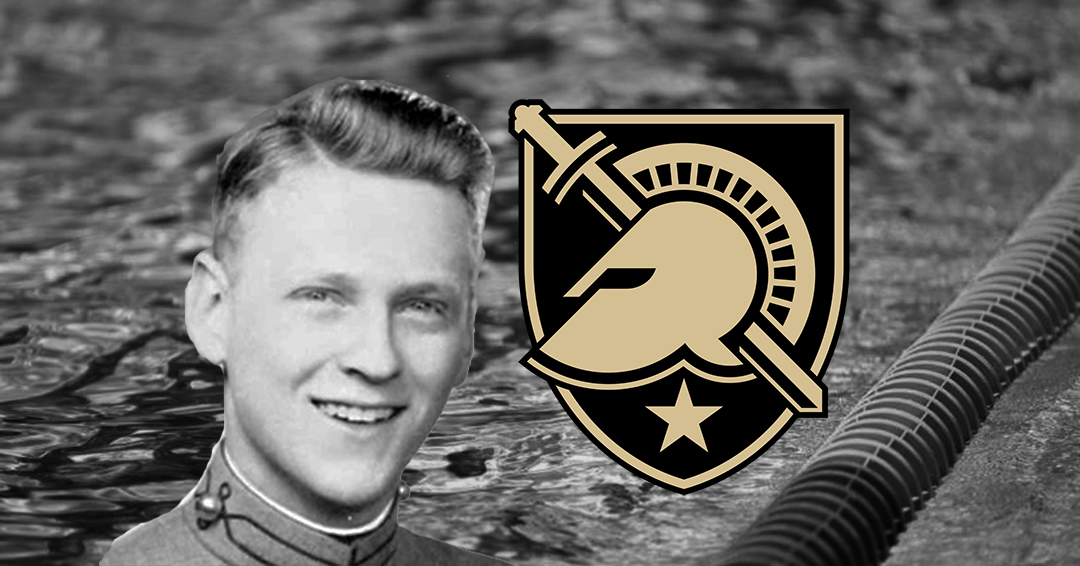
In the restart of a periodic series, the league recalls former United States Military Academy head coach Lieutenant Colonel Rodney Howe Smith ’53 who competed on and later coached the Army water polo.
The battalion commander-designate of the 1st Engineer Battalion of the 1st Infantry Division, Lt. Col. Smith was killed in Vietnam on June 3, 1967 as a result of injuries sustained in a helicopter crash during a combat reconnaissance night flight. The helicopter, contour-flying under conditions of poor visibility, crashed and burned after striking a power line in the vicinity of Bien Hoa while flying low over some rice paddies. Those persons, including Rodney, on one side of the aircraft were pinned under the wreckage. He had already served almost a year as the Battalion’s Executive Officer, and had returned to Vietnam from the United States less than a week before his death to begin a voluntary six-month extension in Vietnam. Killed with him in the crash were the incumbent Battalion Commander, the Battalion Operations Officer and the Battalion Sergeant Major.
The recipient of the Legion of Merit, a Bronze Star, the Combat Infantryman Badge, a Marksmanship Badge, a Korean Service Medal, the National Defense Service Medal, a Republic of Korea Presidential Citation, a Republic of Korea War Service Medal, the United Nations Service Medal, a Vietnam Campaign Medal, a Vietnam Service Medal, a Army Presidential Unit Citation and the Vietnam Gallantry Cross, he is buried at the United States Military Academy Post Cemetery in West Point, N.Y., and is honored on Panel 21e, Line 53 of the Vietnam Veteran’s Memorial in Washington DC.
Born at Walter Reed Hospital on August 2, 1931, into an Army family, the son of a West Point graduate, Smith pointed all his life toward a military career. In his boyhood years, spent in the typical Army pattern of many moves on several continents, He began to develop and demonstrate the personal traits which were to become so pronounced and so well remembered by those who knew him as an adult. If one were to select any particular traits of character which marked his youth, the qualities of self-reliance and resourcefulness would stand out, perhaps brought to fruition by the very demands of being an “Army Brat,” and of often finding one’s self uprooted from things familiar. As a boy, Smith always had some project underway, ranging from printing and selling (for 2¢ a copy) a neighborhood newspaper in Columbus, Ohio, to inventing a new baseball game based upon actual major league statistical probabilities.
After graduation from Western High School in Washington in 1948 and attendance at Sullivans School, Smith entered West Point in July 1949. Having been measured at one-tenth of an inch below the maximum height at the pre-entrance physical, it was not surprising that he found himself in Company M-2, probably his first “unit” association and in any case one of which he was to remain extremely proud. His experiences as a cadet ran the gamut from high achievement to occasional clashes with the system. He had little difficulty with academics, and spent many hours coaching others who did not grasp the material so readily. His resourcefulness and sense of enterprise were still evident as a cadet but, in the view of the Tactical Department, not always properly channeled, and he spent several months as a First-Class-Area-Bird (a historical cadet slang term for a student walking punishment tours in the academy’s barracks courtyard) after the discovery of a not condoned for-profit popcorn concession at the Academy.
While at Army, he discovered the sport of water polo and competed on the varsity level all four years. Further, he met and courted Florence Mood, his future bride.
After graduating 24th in the class of 1953, Rodney followed in his father’s footsteps and was commissioned in the Corps of Engineers. His first assignment after branch school took him to Korea, where he served as a platoon leader, company executive officer and company commander in the 2d Engineers and 18th Engineers, both combat battalions. Following his return from Korea and after making the acquaintance of his daughter, Ceane, he was assigned to the Buffalo (N.Y.) Engineer District. His specific task there was to oversee construction work on a portion of the St. Lawrence Seaway project located at Massena, New York.
From Massena, Smith was sent to graduate school at the University of Illinois. After completing his master’s degree in Civil Engineering in less than the required time, he was extended for several months to complete a Ph.D., which be received in the summer of 1958. His field of interest was structural dynamics, specializing particularly in the effects of atomic blast waves on underground structures, and his doctoral thesis was entitled, “Numerical Integration for One-Dimensional Stress Waves.” Professor Newmark, Head of the Department of Civil Engineering, wrote of Rod’s accomplishments at Illinois: “Rodney was one of the brightest and most capable graduate students I have ever had. He had not only a quick mind but a penetrating analytical one, and together with this he had excellent judgment and engineering intuition. Rod could have had a distinguished career as an engineering scientist or as an engineer in practice.”
Professor Newmark also commented on Rod’s human qualities: “All of us here who knew Rod liked him because of his modesty and attractive personality. He never gave the impression that he was aware of superior intellect or ability. He worked hard and earnestly at his studies and in his research, and I know he also showed the same devotion to duty in his career.” It was also at Illinois that Rod’s second child and first son, Rodney Jr., was born.
After attending the associate career course at Fort Belvoir in Virginia, where he received the Society of American Military Engineers award for the highest course average that year, Smith and his family moved to Frankfurt, Germany, where he served a three-year tour with the U.S. Army Construction Agency. His engineering skills were put to work here particularly in the installation of Mace missile sites in Germany. He received the Army Commendation Medal for his work with United States Army Construction Agency (USACAG). While in Germany, Smith also became actively involved as a vestryman of St. Christopher’s Episcopal Church. The Reverend Donald O. Wiseman, Rector of St. Christopher’s, said of Rod: “One of the things I remember most was his firm sense of community responsibility and a necessity for involvement on a wider scale than one’s family and work. He was here during a time when we were substantially expanding our facilities. Rod’s experience and training were especially valuable in all of this and his readiness to help was greatly appreciated, for many of us knew he could do it only by omitting other activities and commitments.” Rod’s second son, Dan, was baptized in St. Christopher’s.
He returned from Germany with his family in 1962, and, after Command and General Staff College, began a four-year tour in the Department of Military Art and Engineering at West Point. This was to prove to be one of the most rewarding periods in his life – one that would bring him back to the Army water polo team.
Professionally, Smith was again able to apply his engineering knowledge, in teaching the civil engineering honors course, in his own elective course in advanced structural analysis, and in rewriting and modernizing the standard design course in steel. Colonel Charles H. Schilling, Professor and Head of the Department, wrote of Rod’s professional input to the Military Academy: “Rodney Smith was one of the finest young officers with whom I have come into contact, either at West Point or in the field. As an instructor and assistant professor, Rodney’s most remarkable attribute, which he demonstrated time and time again, was his ability to interpret and restate complex theoretical material in language which could be understood and mastered by the layman. I put this talent of Rod’s—which I consider to be the mark of a true Ph.D.—to use on many occasions.”
Technical mastery of a subject is only one part of teaching, however, and the instructor who fulfills his role completely must couple such technical expertise with a genuine interest in others and a sympathetic attitude toward his students. Smith measured up extremely well against both these criteria. It is no doubt for this reason that his advice and counsel were continually sought throughout his life; as an officer by his juniors and seniors alike, and as an instructor at West Point by hundreds of cadets. His students knew that they could count on his complete honesty, his genuine concern for them and a warm and patient reception for their problems.
While at West Point, Rod also found time to play an extremely active role in cadet extracurricular activities. He served as officer-in-charge and coach of the cadet water polo team for three of his four years at the Academy. As an officcr-in-charge of the Cadet Ski Club, he had a major hand in designing and supervising the installation of the vastly improved facilities at the Victor Constant Ski Slope, including the construction of two new ski lifts and an extensive snow-making system.
Rod’s last tour was, of course, in Vietnam, and it was in his work here that he probably took the most pride. Those of us who saw him when he returned home on leave shortly before his death could not fail to be impressed by his conviction of the worth of our presence in Vietnam, by his pride in our professional Army there, and particularly by his enthusiasm at the prospect of taking over command of what his assistant division commander, Brigadier General James F. Hollingsworth, described as “the finest and most professional Engineer Battalion ever fielded in combat.” For his contribution in Vietnam, Rodney was awarded the Legion of Merit and the Bronze Star for Valor.
The variety of Rodney’s achievements in his lifetime has been recognized in a rare way for one who died so young. A window in St. Christopher’s Church in Frankfurt, Germany, was dedicated as a memorial to his presence. The Eastern Collegiate Water Polo Conference – a forerunner of today’s CWPA – renamed the trophy given to the winner of its annual championship tournament as the LTC Rodney H. Smith Memorial Trophy. A portion of the Victor Constant Ski Slope which Smith personally designed was named “Rod Smith’s Glade.” Rodney’s eldest son was awarded a scholarship by the Society of the First Infantry Division in recognition of Smith’s service in Vietnam. Finally, his friends and former colleagues in the Department of Military Art and Engineering sponsored the establishment of the LTC Rodney H. Smith Award, presented to the graduating cadet standing first in engineering.
Smith’s close friend and classmate, Lieutenant Colonel Allen F. Grum, who served with Rod in Korea, in Europe, and at West Point, wrote, “I’m sure that there will always be a lingering thought of ‘what might have been.’ Rodney certainly would have been a big wheel someday. He had everything going for him—brains, personality, the respect of superiors, subordinates, and, rarest of all, contemporaries—and the quality that outshone all others was that tremendous dedication. But I think the ‘might have been’ is not nearly as important as the ‘what is’—look at Rod’s accomplishments, a good company commander in Korea, his doctor’s degree at Illinois, his work with USACAG, the first to attend C&GSC (U.S. Army Command and General Staff College), so much of the CE department is his creation virtually single-handedly, the ski slope, water polo, that tremendous record in Vietnam. I’ve often thought in the last few days that God allots to each person a measure of work, and Rod accomplished his in a few short years while the rest of us struggle on to try to match him. Since Rod was finished, it was time for Home and Rest.”
His obituary posted by the West Point Association of Graduates notes, “We all try to be Rod Smiths, but few of us succeed as he did.”